

A Polarized Senate Opens Strategic Leverage for the Minority Bloc to Influence Key National Issues
The Editorial Board
In previous Senates, walkouts from the minority bloc would have amounted to little more than a symbolic act of dissent. Today, it is enough to paralyze the upper chamber’s order of business.
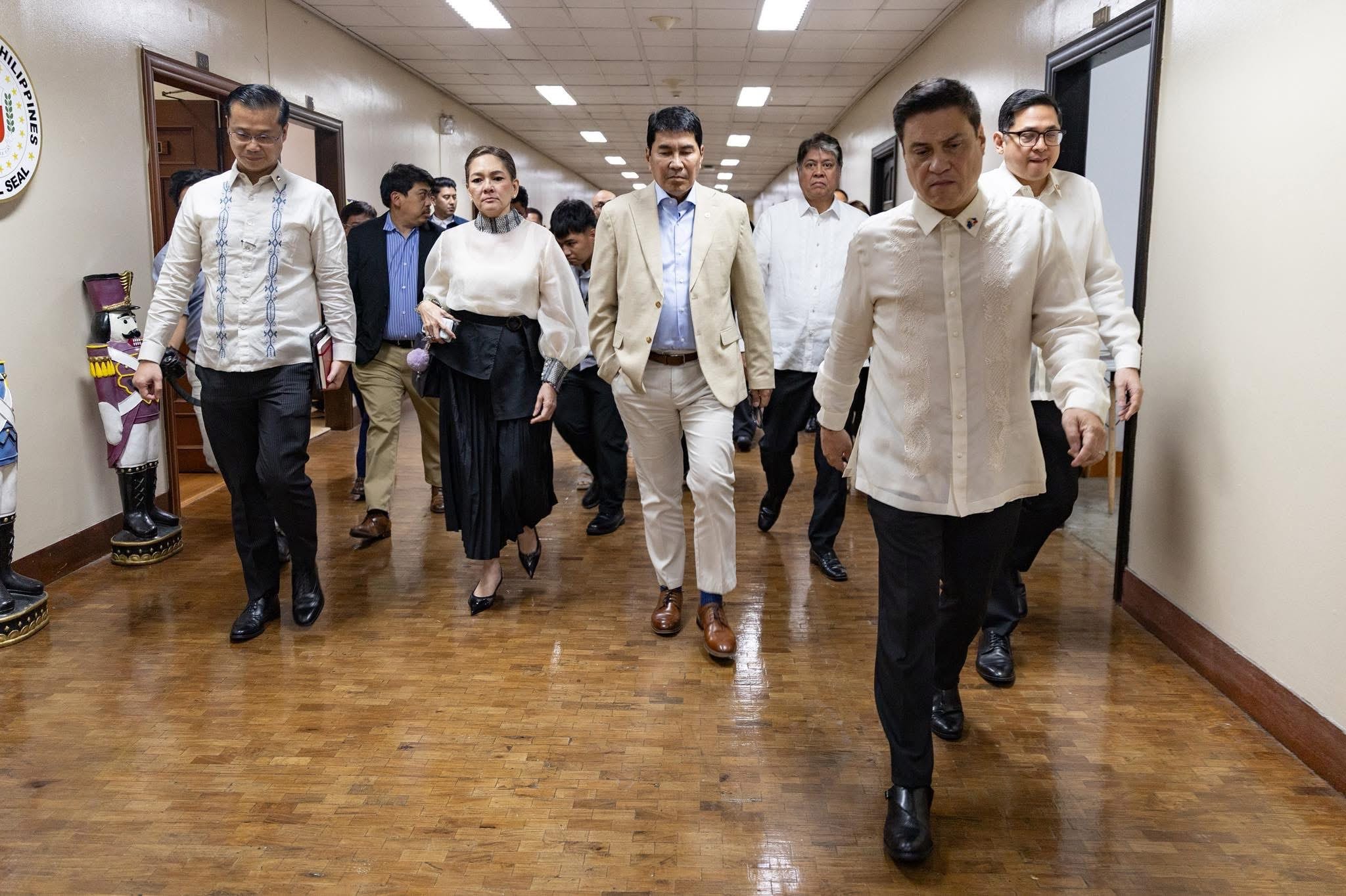
In condemnation of the majority’s insistence to divide the house for a motion that seeks to allow online participation and voting of senators, the minority bloc on May 26 walked out of the session hall—effectively collapsing the quorum and forcing adjournment.
For decades, the Senate has operated under supermajorities. It now finds itself in unfamiliar territory as the minority bloc stands nearly on equal numerical footing with the majority, 13 against the minority’s 11. Recent developments further expose the majority’s tenuous grip on power: they can only muster 11 warm bodies due to the prolonged absence of Sen. Bato Dela Rosa and the fresh arrest of Sen. Jinggoy Estrada. Save for his latest attendance that was crucial for securing the votes to permit the recent leadership shakeup and a looming warrant of arrest from the International Criminal Court, Dela Rosa is not expected to appear before the Senate anytime soon. Whereas, Estrada is currently in detention following an arrest warrant for plunder and graft charges connected to the flood control corruption scandal.
While evidently polarizing, such a political opening may prove useful, especially to progressive lawmakers in the opposition, in capitalizing on the opportunity to assert meaningful leverage in the Senate. Without a compelling number to constitute a quorum, the minority can, as it has done, simply disrupt the conduct of sessions when it deems necessary.
This crisis of political establishment further deepens when placed alongside the mounting controversies and issues hounding the country and even the Senate majority itself. A recent report by the Philippine Center for Investigative Journalism found that of the 11 senators aligned with the majority bloc facing unresolved or ongoing investigations, six are involved in the flood control probes. That senators hounded by corruption allegations continue to dominate the legislative agenda reveals how deeply compromised the institution has become.
Among the most controversial is the alleged involvement of Sens. Joel Villanueva and Jinggoy Estrada in the anomalous flood control projects now under scrutiny by the Office of the Ombudsman, with Estrada already surrendering following the plunder charges filed before the Sandiganbayan. Even the latest membership of the Blue Ribbon Committee, the investigative arm of the Senate for alleged corruption and misconduct by government officials, are composed of solons who refuse to sign the partial flood control report of the committee previously headed by Sen. Ping Lacson despite the mounting evidence against those implicated.
The Senate, supposedly a chamber of accountability and democratic deliberation, has increasingly become an arena for elite preservation and political maneuvering.
Urgent national concerns—wage stagnation, systemic corruption, and inflation—have been lodged in the backseat to make way for such theatrics between political factions. The leadership dispute, too, has delayed the completion of members of each of the committees. Among those affected by the postponements were hearings involving farmers from various communities, who, despite it being harvest season, traveled to speak on agricultural setbacks caused by rising fuel, fertilizer, and transportation costs.
Yet within this deadlock lies an unusual contradiction: the minority now possesses real leverage.
This was evident during the minority’s walkout in protest of what it viewed as the majority railroading an amendment in the Senate rules. Sen. Erwin Tulfo even implied that such a move was to accommodate the expected absences of some lawmakers with active investigation cases. More so, it was a desperate scramble for power by the majority to ensure their bloc constitutes a quorum regardless of the minority’s presence, with Dela Rosa likely their missing piece, and now also Estrada.
In previous Senates, such a move would have amounted to little more than a symbolic act of dissent. Today, it is enough to paralyze the upper chamber’s order of business.
For perhaps the first time in years, the minority possess the numerical capacity to challenge the dominance of the ruling bloc. This leverage matters because the current Senate deadlock will shape the trajectory of major national issues like the investigations into corruption and misuse of public funds and broader efforts to advance socioeconomic reforms such as wage increases, agricultural support, and cost-of-living interventions.
But political will, above all, will be the test for progressive lawmakers like Sens. Kiko Pangilinan, Bam Aquino, and Risa Hontiveros as a polarized Senate can also do so much for genuine democratic transformation. In reality, competing factions, political survival, dynastic interests, and tactical alliances still shape the legislative branch of the government.
Nonetheless, such conditions present opportunities for the minority to maximize its leverage and obtain greater proportional representation in Senate committees and obstruct attempts to railroad decisions that shield political allies from accountability.
In this polarized chamber, the minority must take up the mantle not by sitting idly as rival factions attempt to neutralize one another, but by intensifying public demands for a Senate that genuinely serves the interests of the Filipino people. ◆